May 12, 2026 · 2 min read
“I’m not flexible enough to do Pilates.” We hear this often, and it always makes us smile. Reformer Pilates doesn’t require flexibility: it is actually one of the best ways to gain it. Here’s how it improves both mobility and flexibility, two essential qualities for a free, pain-free body.
Mobility and flexibility: what’s the difference?
The two terms are often confused, but they mean different things.
- Flexibility is a muscle’s ability to lengthen. It’s what you measure, for example, when trying to touch your toes.
- Mobility is a joint’s ability to move actively through its full range, with control and strength.
You can be very flexible without being mobile: a dancer can reach large ranges without controlling her joints. Conversely, good mobility combines flexibility and strength. That’s exactly what Reformer Pilates develops.
Why do we lose mobility?
A sedentary lifestyle, hours of sitting, stress and ageing gradually reduce the range of our joints. The hips close up, the upper back stiffens, the shoulders lose their freedom. Over time, simple movements become harder and the risk of pain increases. We approach this topic from another angle in our article on Pilates after 40.
How Reformer Pilates improves mobility
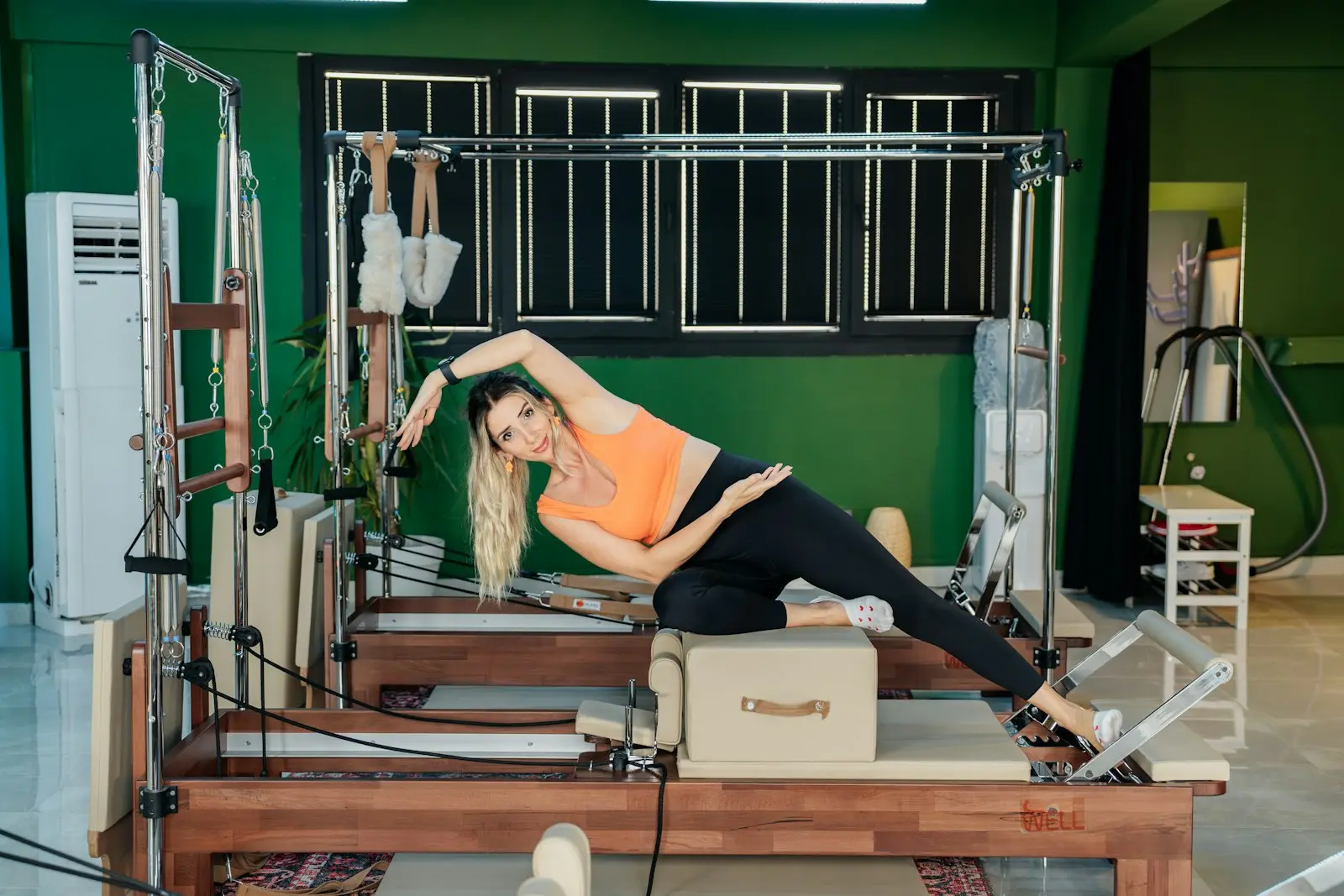
The Reformer is an exceptional tool for mobility. The springs support the body in stretching positions while demanding active control. You stretch in motion, engaging the muscles, rather than holding a posture passively. This approach develops useful, lasting flexibility.
Several exercises target the areas that are most often stiff:
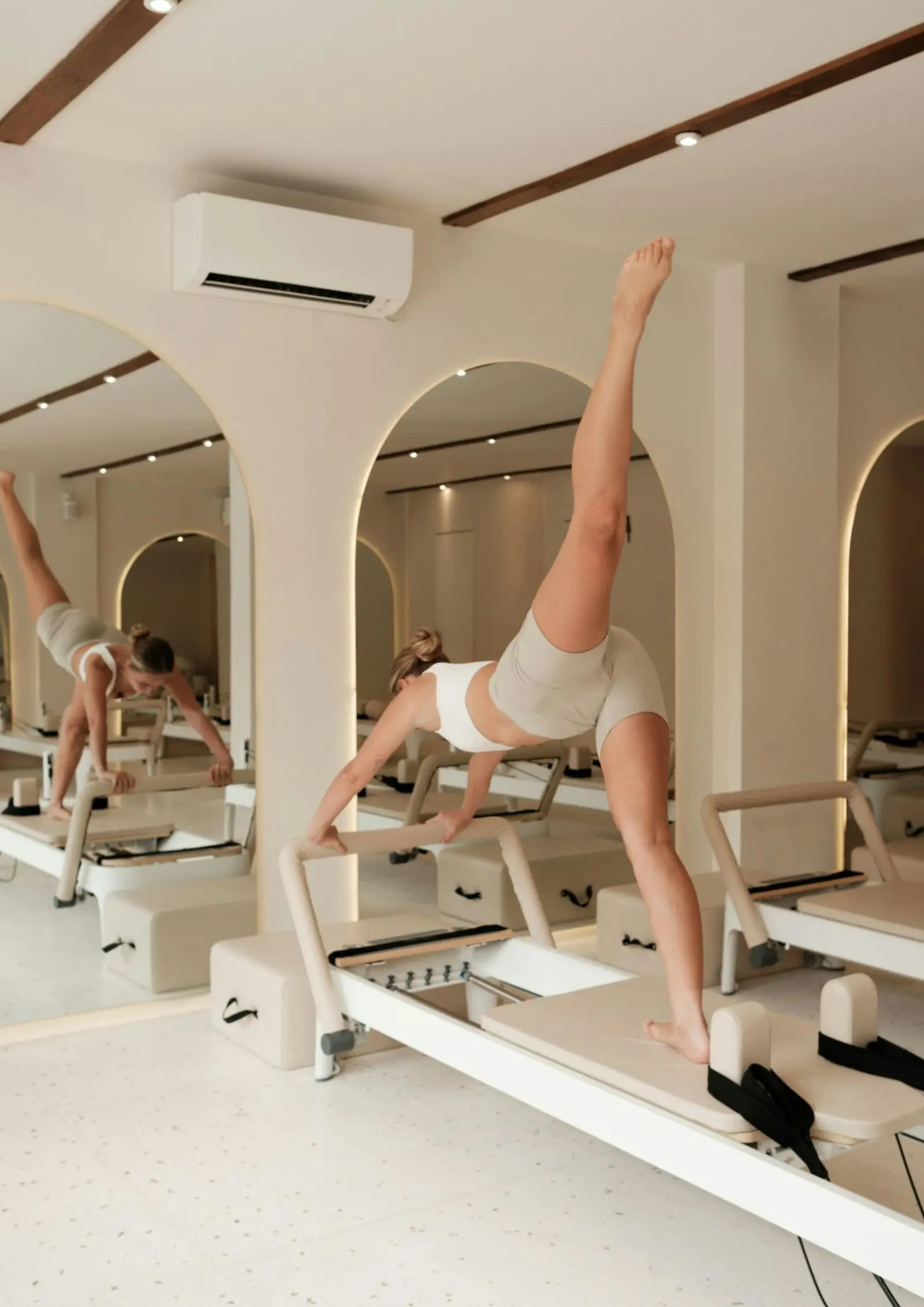
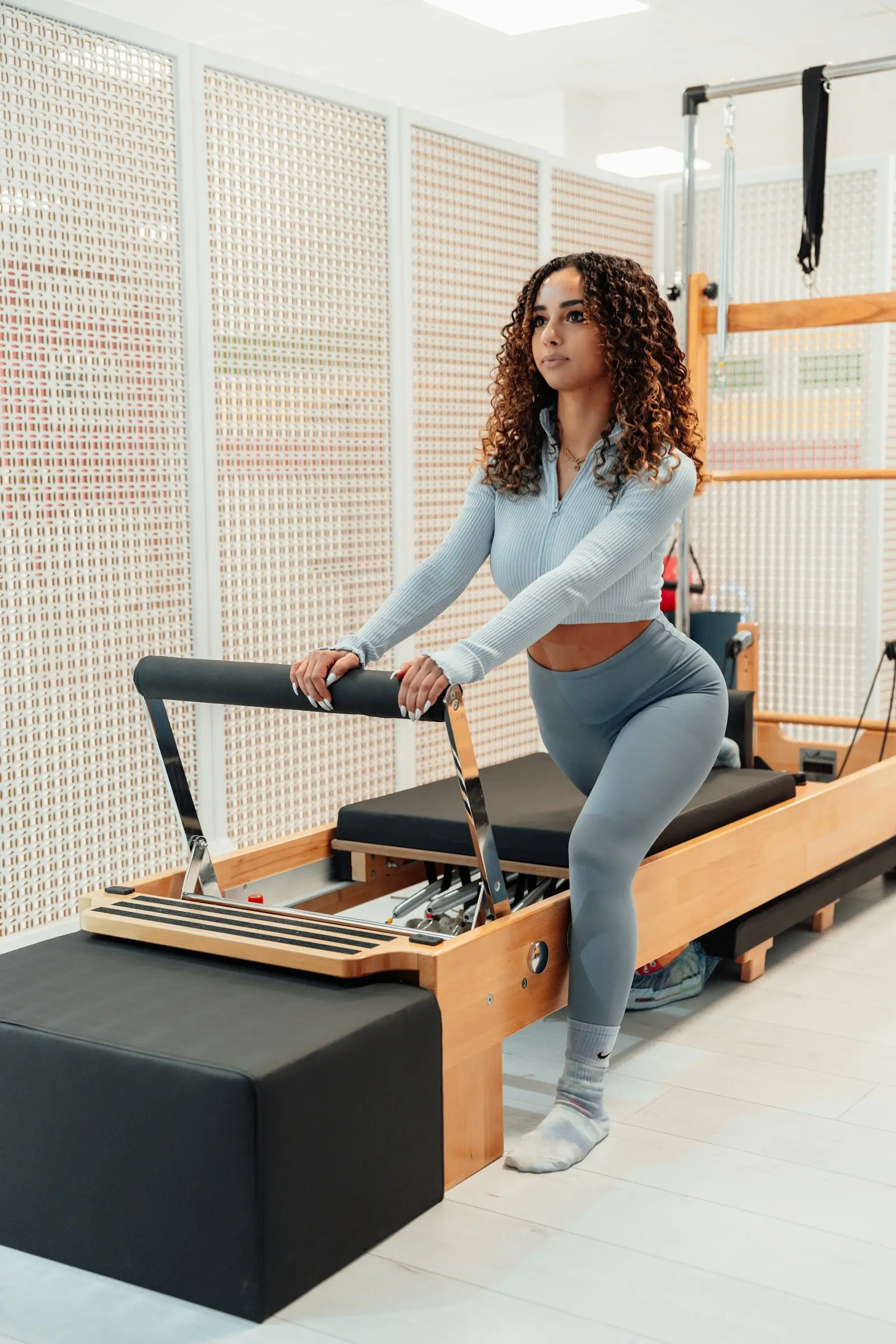
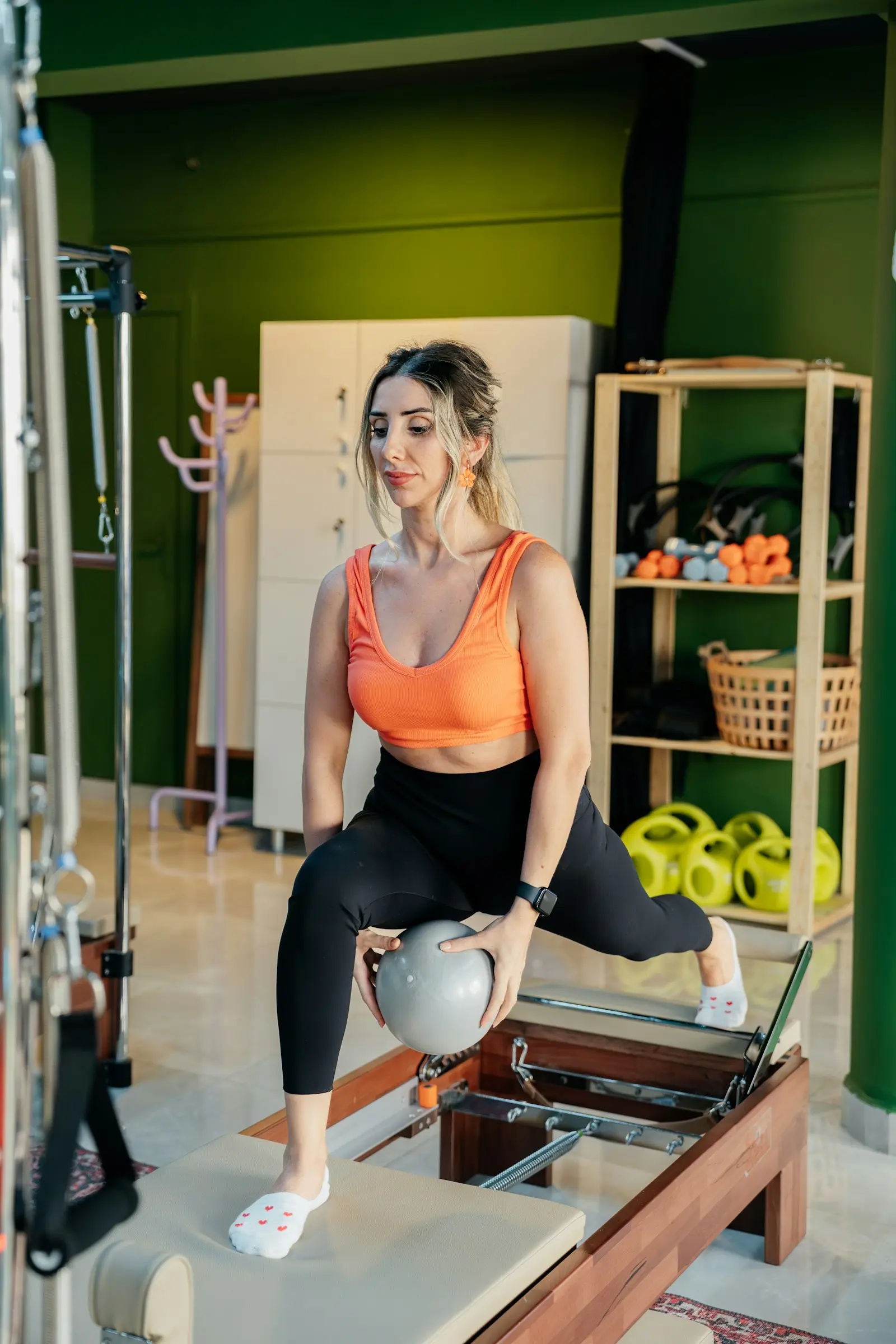
- Hips: lunges on the carriage, leg circles in the straps, hip openers.
- Spine: vertebra-by-vertebra articulation, controlled rotations and extensions.
- Shoulders: arm movements with the straps in every direction.
- Back of the legs: active stretches of the hamstrings and calves.
The benefits of better mobility
- Easier, smoother everyday movements.
- Less stiffness in the morning and after a long day of sitting.
- Better posture.
- Better athletic performance.
- A reduced risk of injury.
Progress at your own pace
Every body has its own starting point. In Reformer Pilates, there is no pressure to reach a specific range. Your instructor adapts exercises to your level and helps you progress gradually, never forcing. The first mobility gains are often felt within a few weeks of regular practice.
A few tips to maintain your mobility
- Move a little every day, even for a few minutes.
- Get up regularly if you work sitting down.
- Warm up before stretching.
- Breathe deeply during stretches to help the muscles release.
- Be consistent: mobility is gained through consistency, not force.
Mobility and breathing
Breathing plays a big role in mobility. A tight muscle releases more easily when the exhale is long and calm. That’s why, in Reformer Pilates, every stretch is paired with conscious breathing. Instead of forcing the range, you let the body open gradually, breath after breath, which makes the gains more comfortable and more lasting.
What if you have a specific condition?
In case of injury, hypermobility or joint pain, talk to a healthcare professional and let your instructor know before class. Our FAQ covers several specific situations.
Free your body
More mobility means more freedom. Book your Reformer Pilates class in Laval and rediscover the pleasure of moving without restriction.
Ready to try?
Experience Reformer Pilates in Laval
Book your class at the BLVD Pilates studio in Chomedey and feel the difference from the very first session.