July 7, 2026 · 2 min read
During your first Reformer Pilates class, your instructor may use words that sound new to you: carriage, footbar, straps, springs… Don’t worry! Here is a short glossary to understand the machine and the most common terms, so you feel at ease from the very first session.
The Reformer
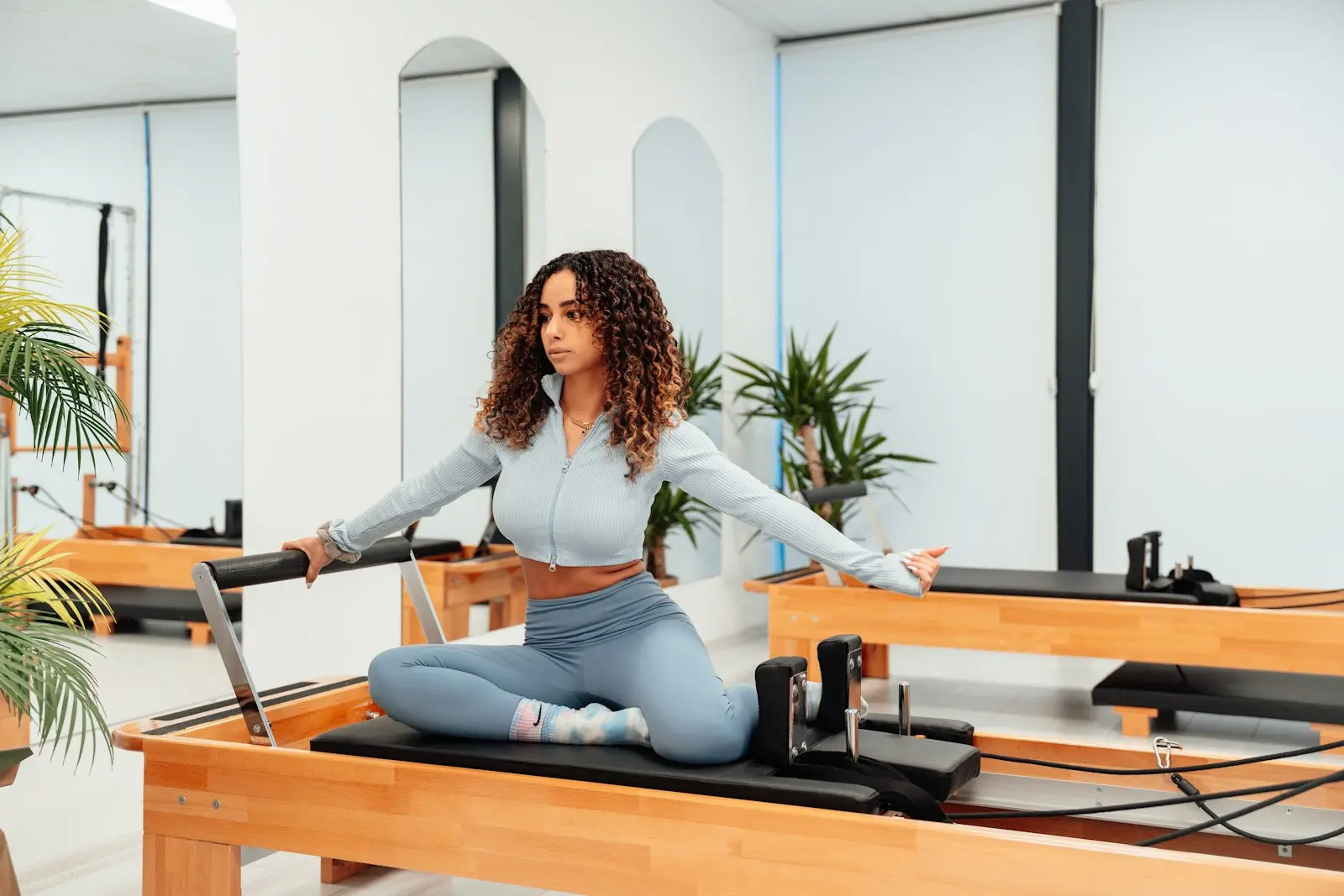
The Reformer is the machine at the heart of the method. Invented by Joseph Pilates, it consists of a frame, a sliding carriage, springs, a footbar and straps. Its name comes from its purpose: to “reform” the body by strengthening and realigning it. To learn more about its creator, read our article on the history and principles of Pilates.
The carriage
This is the padded platform you lie, sit or kneel on. It slides back and forth on rails. The challenge of each exercise often lies in controlling this movement, both on the way out and on the way back.
The springs
Located under the carriage, the springs create resistance. They are usually identified by colour, each corresponding to a different tension. Contrary to what you might think, more springs doesn’t always mean harder: for some stability exercises, lighter resistance makes the movement more demanding, because the body has to control more.
The footbar
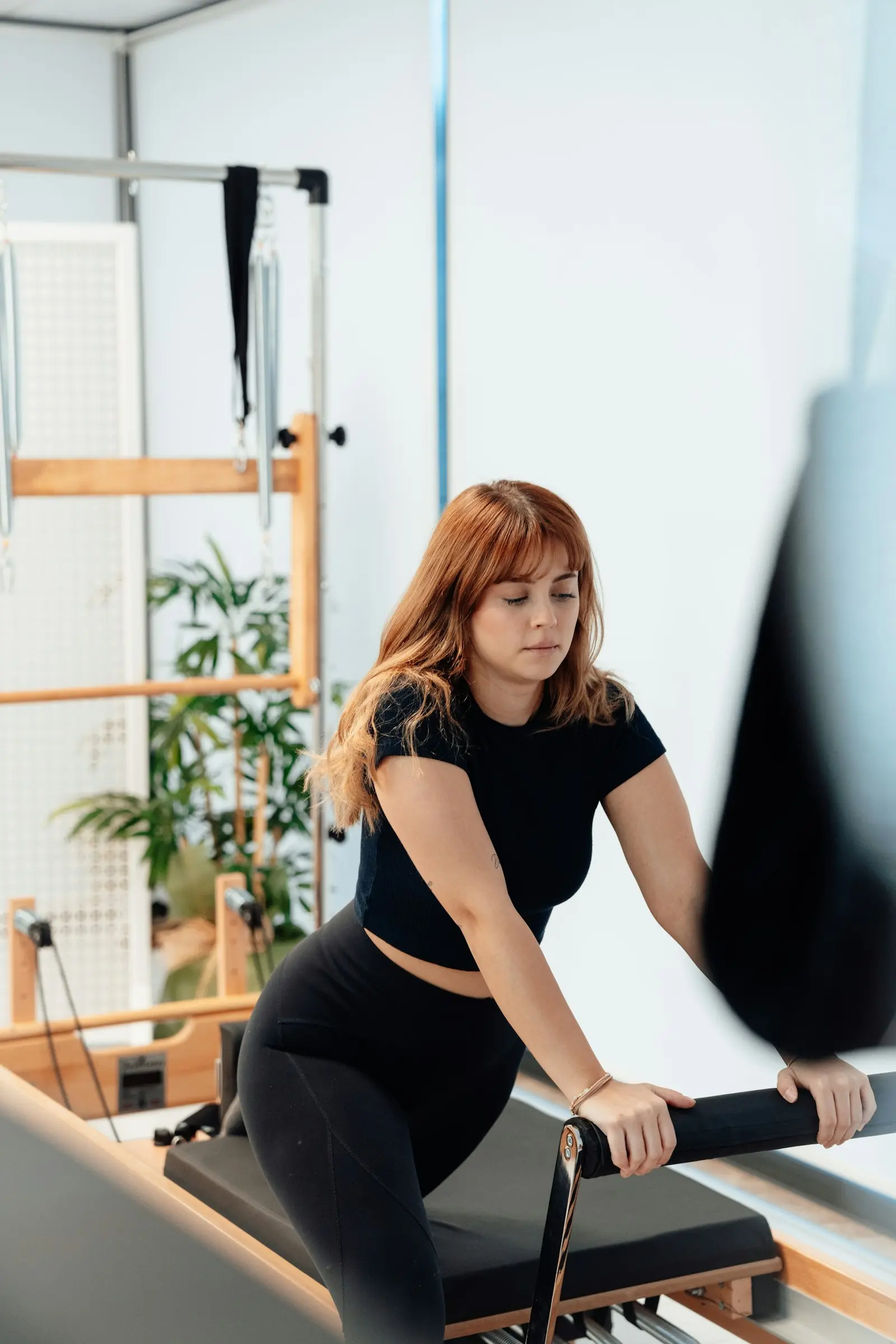
This is the adjustable bar at the end of the Reformer. You place your feet or hands on it to push the carriage. “Footwork”, the series of exercises where you push with your feet on the bar, often opens the class: it warms up the legs and activates the core.
The straps
The straps are attached to ropes connected to the carriage. You slip your hands or feet into them to pull against the resistance of the springs. They make it possible to work the arms, back, legs and hips in many directions.
The headrest and shoulder blocks
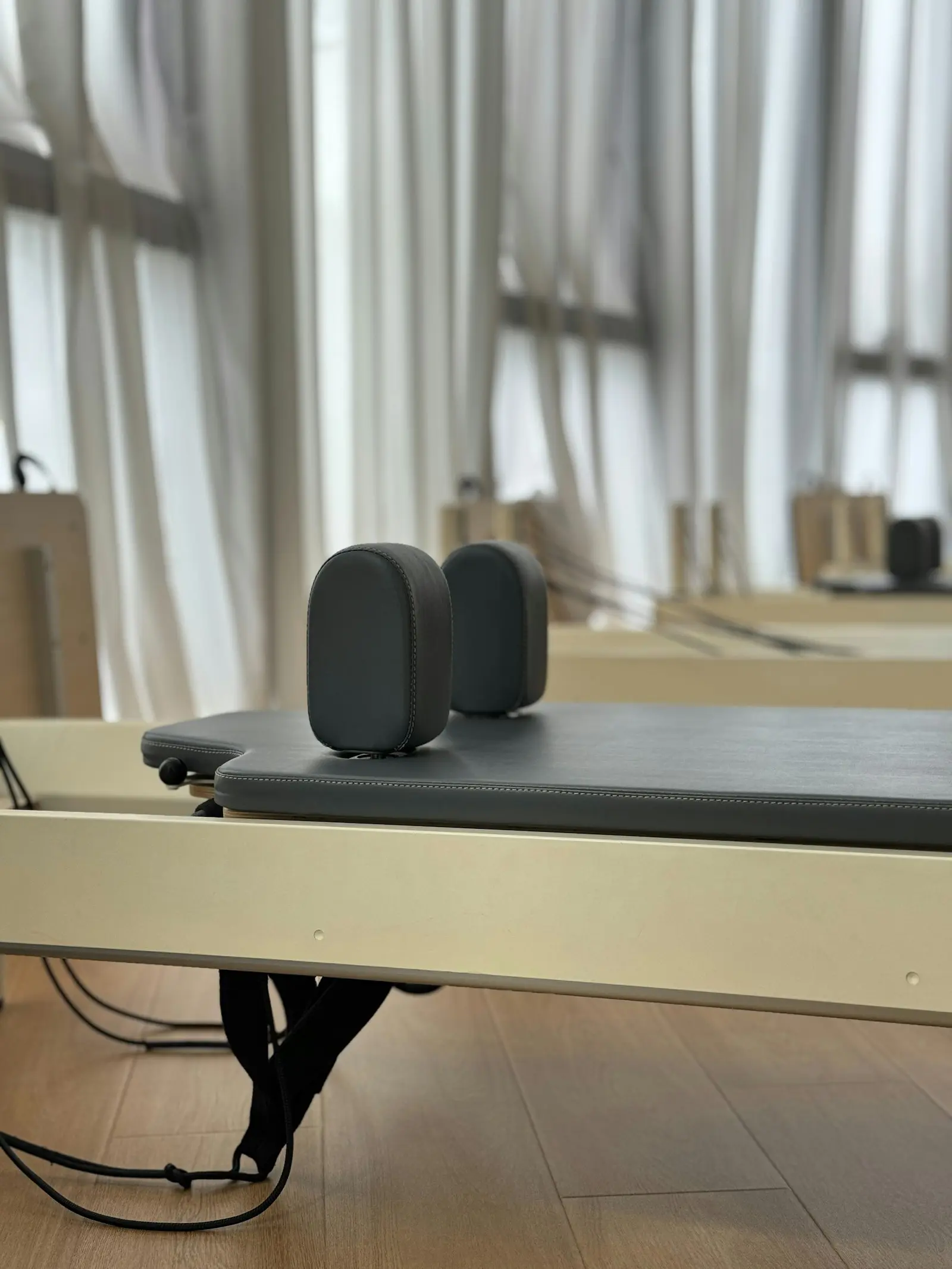
The headrest is the adjustable head support that holds your neck during lying exercises. The shoulder blocks are the two blocks at the front of the carriage that keep the body from sliding and provide support for the feet or hands.
The box
This is a padded block placed on the carriage for exercises seated or lying on your stomach. It adds variety and an extra challenge for the back and core.
A few movement terms
- Neutral: the natural position of the spine and pelvis, with its natural curves.
- Imprint: the lower back gently pressed into the carriage for more stability.
- Powerhouse: the centre of the body, made up of the deep abdominals, back, glutes and pelvic floor.
- Articulate: rolling the spine one vertebra at a time.
What about other machines?
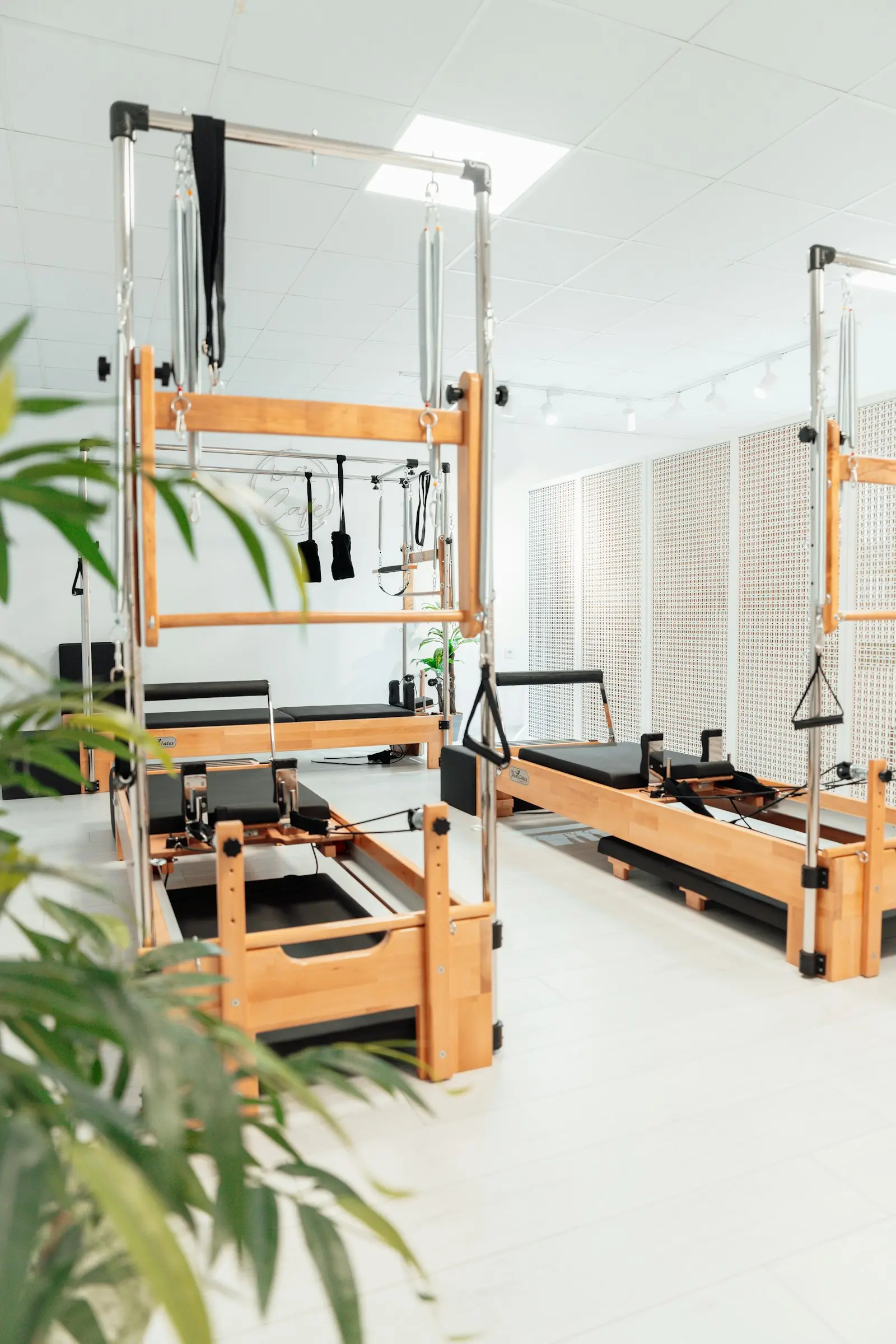
In some studios, you will also see the Cadillac (or tower), a large frame with bars and springs, as well as the Pilates chair. To discover our space and equipment, take a tour of our gallery.
Ready for your first class?
With this glossary in hand, you are ready to step onto the Reformer. And if a word escapes you during the session, your instructor will always be there to explain it. Book your Reformer Pilates class in Laval and put this new vocabulary into practice.
Ready to try?
Experience Reformer Pilates in Laval
Book your class at the BLVD Pilates studio in Chomedey and feel the difference from the very first session.